Grade 9 Science

STEM Skills, Careers and Connections

apply scientific processes and an engineering design process in their investigations to develop a conceptual understanding of the science they are learning, and apply coding skills to model scientific concepts and relationships
A1.
analyse how scientific concepts and processes can be applied in practical ways to address real-world issues and in various careers, and describe contributions to science from people with diverse lived experiences
A2.


Biology: Sustainable Ecosystems and Climate Change
assess impacts of climate change on ecosystem sustainability and on various communities, and describe ways to mitigate these impacts
B1.
demonstrate an understanding of the dynamic and interconnected nature of ecosystems, including how matter cycles and energy flows through ecosystems
B2.
Climate Change and Indigenous Communities
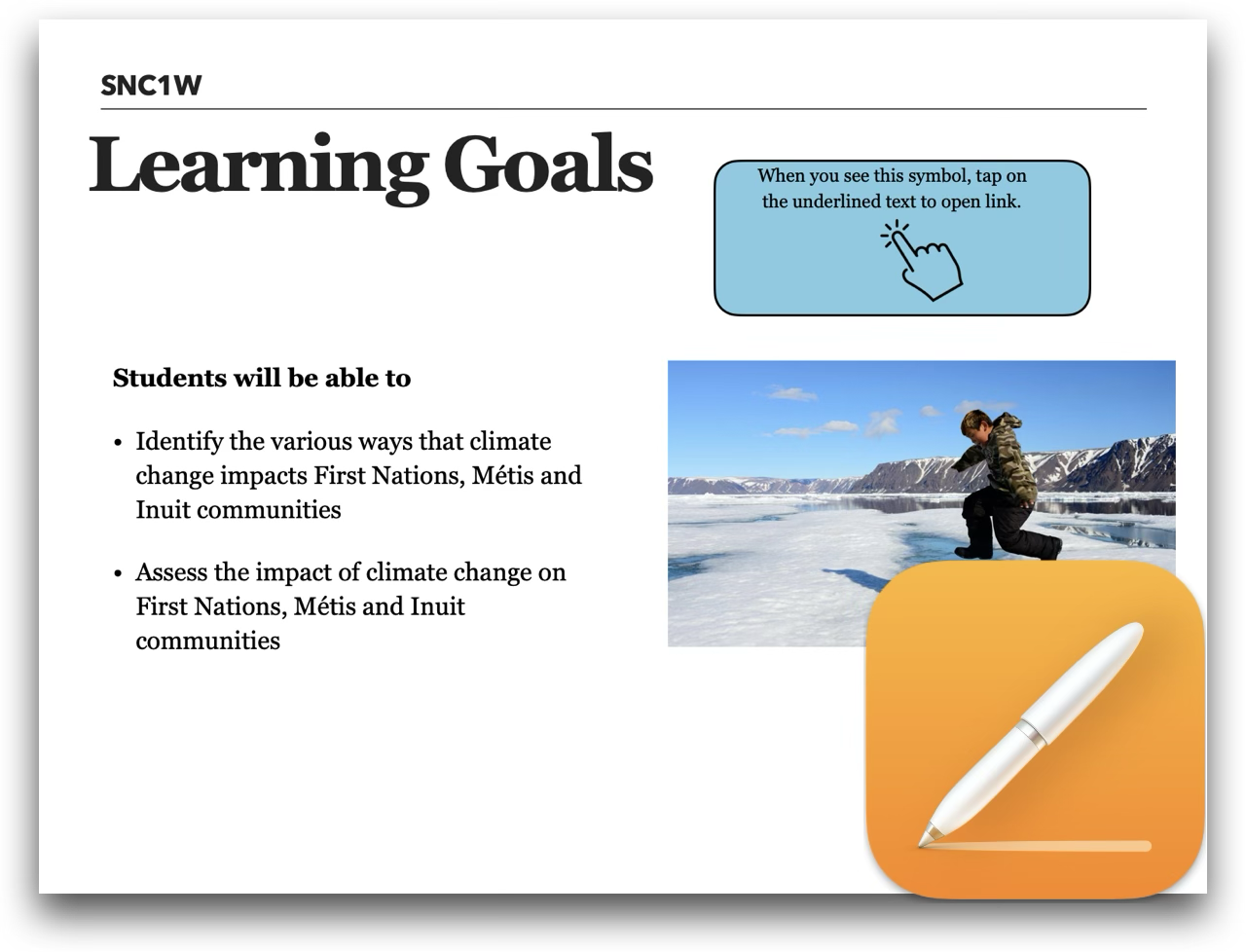
Learning Goals:
Students will:
identify the various ways that climate change impacts First Nations, Métis and Inuit communities
assess the impact of climate change on First Nations, Métis and Inuit communities
*This Pages file requires an iPad to open.
Invasive Species

Learning Goals:
Students will:
identify and explain what makes a species invasive and describe its impacts on ecosystems, economies, and human health
analyze media (video, audio, text) to deepen their understanding of invasive species in local and global contexts
construct evidence-based claims about invasive species using the Claim, Support, Question framework.
*This Pages file requires an iPad to open.
How can we feed the world without hurting the planet?

B2.7 Explain how sustainable practices related to the cycling of matter and the flow of energy can be applied in agricultural innovations
In this hands-on STEAM project, students explore the environmental impacts of traditional farming and discover the power of indoor growing technologies. Using InkSmith’s Climate Action Kits, students become engineers as they learn about sustainable agriculture.
Students will:
Investigate how fertilizer runoff and soil erosion affect our ecosystems.
Explore Hydroponics, Aquaponics, and Aeroponics systems that use up to 95% less water and no soil.
Design, build, and code an automated irrigation system using a micro:bit to grow their own crops
Chemistry: The Nature of Matter
assess social, environmental, and economic impacts of the use of elements, compounds, and associated technologies
C1.
demonstrate an understanding of the nature of matter, including the structure of the atom, physical and chemical properties of common elements and compounds, and the organization of elements in the periodic table
C2.
Physics: Principles and Applications of Electricity
assess social, environmental, and economic impacts of electrical energy production and consumption, and describe ways to achieve sustainable practices
D1.
demonstrate an understanding of the nature of electric charges, including properties of static and current electricity
D2.
Earth and Space Science: Space Exploration
evaluate social, environmental, and economic impacts of space exploration and of technological innovations derived from space exploration
E1.
demonstrate an understanding of the components, characteristics, and associated phenomena of the solar system and the universe, and the importance of the Sun to processes on Earth
E2.
Back to: