STEM Skills, Careers, and Connections

STEM Investigation Skills

Science Workbook Templates
These workbook templates were designed for teachers to modify based on their inquiry activity. Please read through the various options and teacher prompts to help with creating your own version to use with your students.
Feel free to reach out to a learning coach for support with these workbooks.
To access the file, click on the image and download a copy. Rename the template, make any desired edits, then share it with your students.
*This Pages file requires an iPad to open.

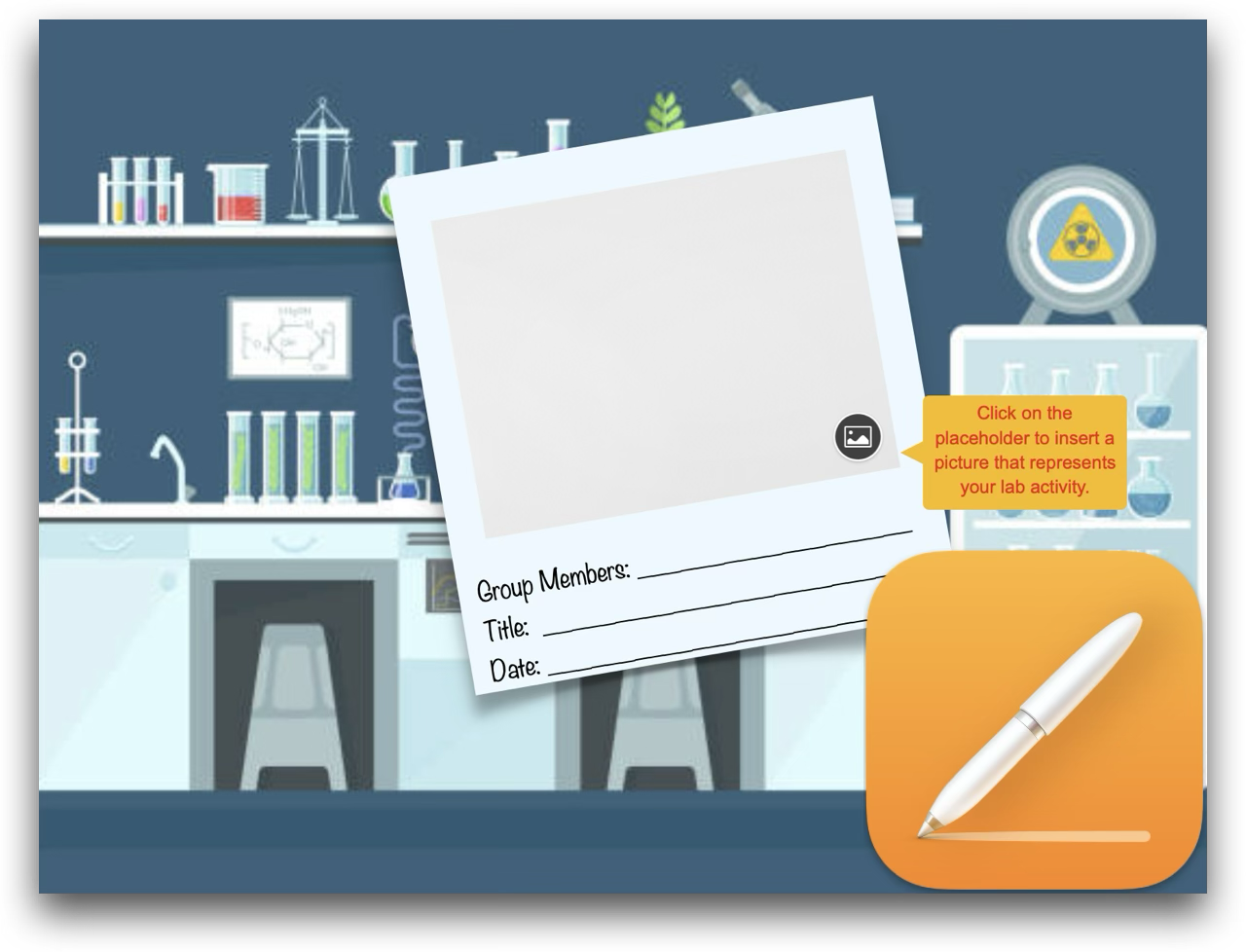
Lab Workbook

Engineering Design Workbook
Coding and Emerging Technologies
Sample Lessons Connected to Coding and Emerging Technologies
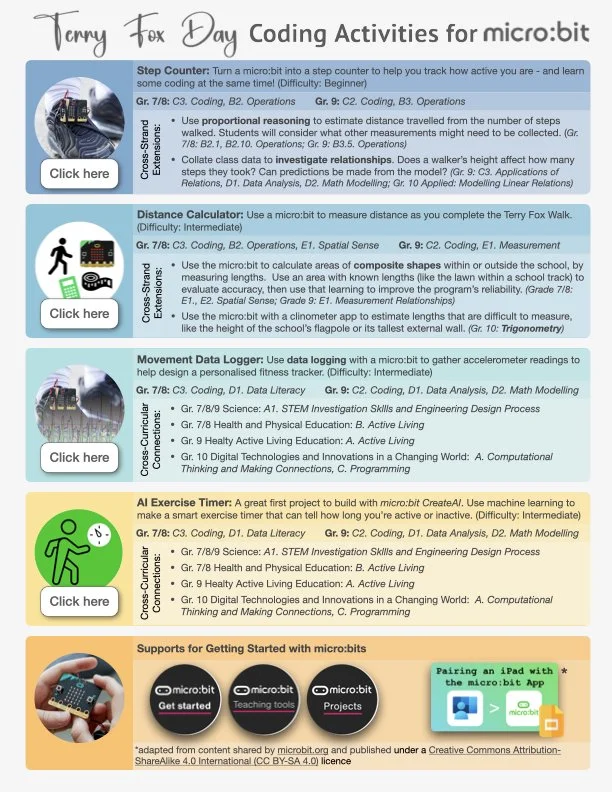
micro:bit Coding Activities for Terry Fox Day
Grade 7 to 10 students can turn micro:bits into activity trackers and distance calculators with this set of coding challenges. Explore four ready-to-use activities, complete with starter resources, and discover extension ideas that connect to proportional reasoning, measurement, algebraic relationships, and even trigonometry!
More micro:bit Resources
Grade 7 to 10 students can turn micro:bits into activity trackers and distance calculators with this set of coding challenges. Explore four ready-to-use activities, complete with starter resources, and discover extension ideas that connect to proportional reasoning, measurement, algebraic relationships, and even trigonometry!
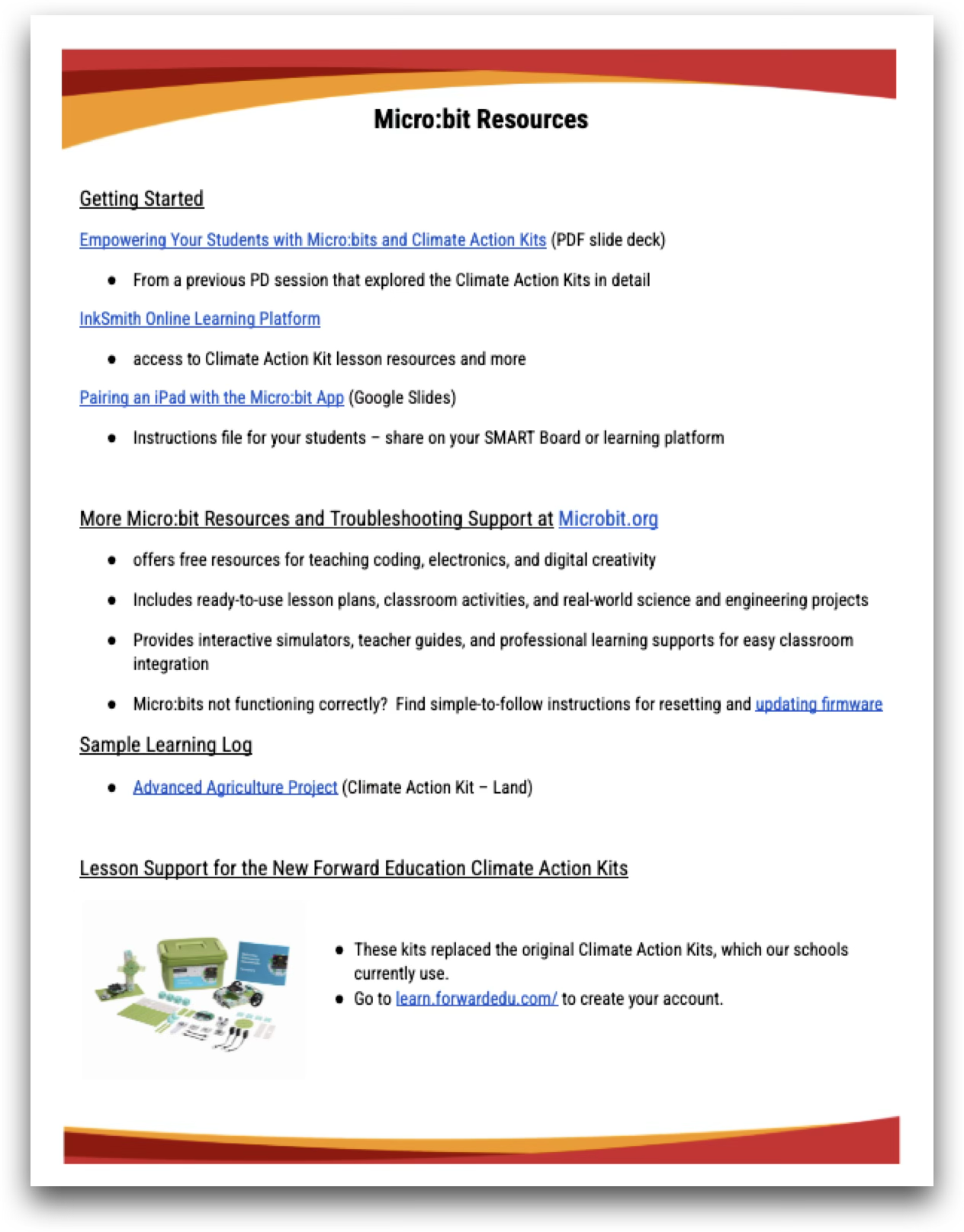

Empowering your Students with micro:bits and Climate Action Kits
This resource provides a deep dive into using micro:bit technology alongside Climate Action Kits to address real-world challenges like land use and energy. It offers practical, grade-specific applications (Grades 7–9), hands-on coding tutorials, and essential assessment tools like self-assessment checklists and rubrics. This PD presentation slide deck serves as an inspiring roadmap for fostering innovation and climate awareness in students.

SNC1W: How can we feed the world without hurting the planet?
B2.7 Explain how sustainable practices related to the cycling of matter and the flow of energy can be applied in agricultural innovations
In this hands-on STEAM project, students explore the environmental impacts of traditional farming and discover the power of indoor growing technologies. Using InkSmith’s Climate Action Kits, students become engineers as they learn about sustainable agriculture.
Project Highlights:
The Problem: Investigate how fertilizer runoff and soil erosion affect our ecosystems.
The Solution: Explore Hydroponics, Aquaponics, and Aeroponics—systems that use up to 95% less water and no soil.
The Challenge: Students design, build, and code an automated irrigation system using a micro:bit to grow their own crops.
Applications, Careers, Connections, and Contributions
Back to: