MTH1W:
Algebra
C3. Application of Relations
C3.1 compare the shapes of graphs of linear and non-linear relations to describe their rates of change, to make connections to growing and shrinking patterns, and to make predictions
Understanding Algebraic Expressions and Equations

This lesson introduces students to algebra tiles and use them to visually understand the meaning of algebraic expressions. The content is based on lessons developed by Jackie Decker (a fellow Ontario educator) and links to her brief YouTube video that walks teachers through the activity and gives excellent teacher tips to help facilitate and consolidate student thinking. The printable teacher guide below summarizes Jackie’s suggestions and links to her video. It also links to an optional Desmos Activity that you can copy and use to facilitate the lesson.


Suggested Tools:


From Patterns to Algebra
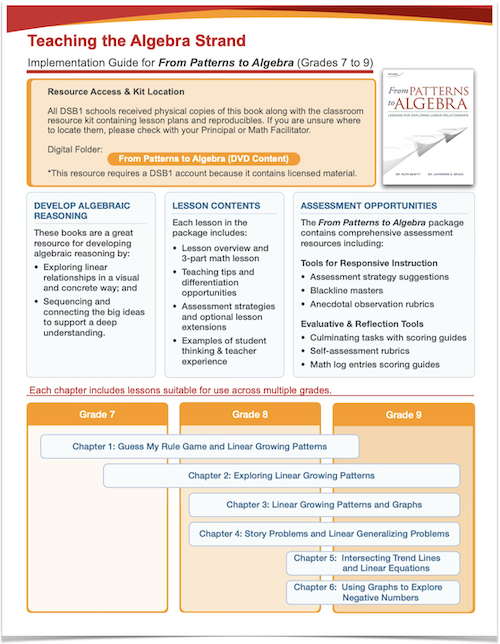
All DSB1 schools were provided with the book, classroom resource kit (lesson plans and reproducibles) and DVD (videos, whiteboard lesson slides, etc.).
If you’re unsure where to locate them, please check with your principal.
These books are a great resource for developing algebraic reasoning by:
Exploring linear relationships in a visual and concrete way;
Sequencing and connecting the big ideas to support a deep understanding.
Each lesson in From Patterns to Algebra includes:
Lesson overview
3-part math lesson
Teaching tips
Differentiation opportunities
Assessment strategies
Optional lesson extensions
Examples of student thinking
Examples of teachers’ experience (stumbling blocks, insights, etc.)
Coding Resources — Pseudocode Tasks
Looking to hit coding expectations without losing time in other subject areas? These pseudocode tasks make it seamless to embed computational thinking directly into your math lessons. Use them as quick 5-minute "minds-on" warm-ups to activate prior knowledge, or build them into full-period activities to cover two curriculum goals at once. Explore our collection of sample activities below to find inspiration for your next lesson.

Summary of all pseudocode examples and sample tasks from the Ontario curriculum.
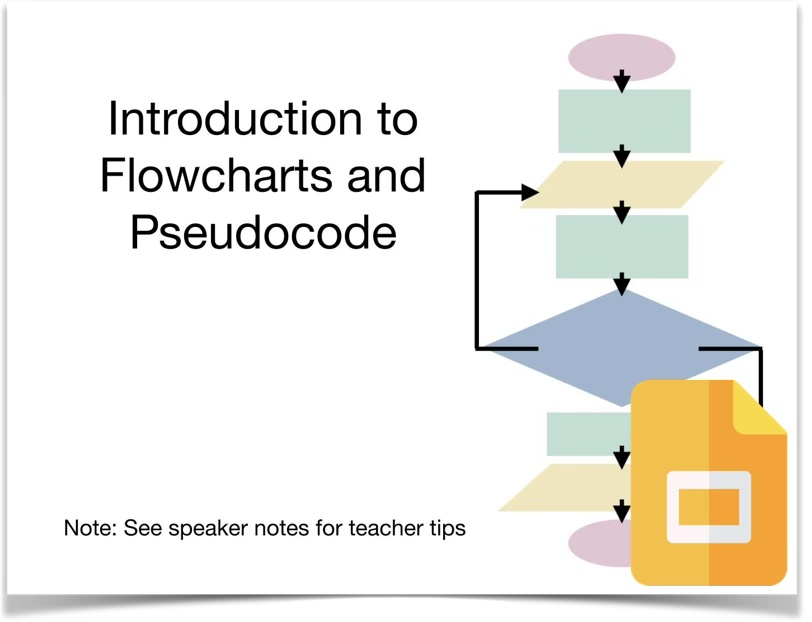
Introduction to Flowcharts and Pseudocode (Google Slides lesson)
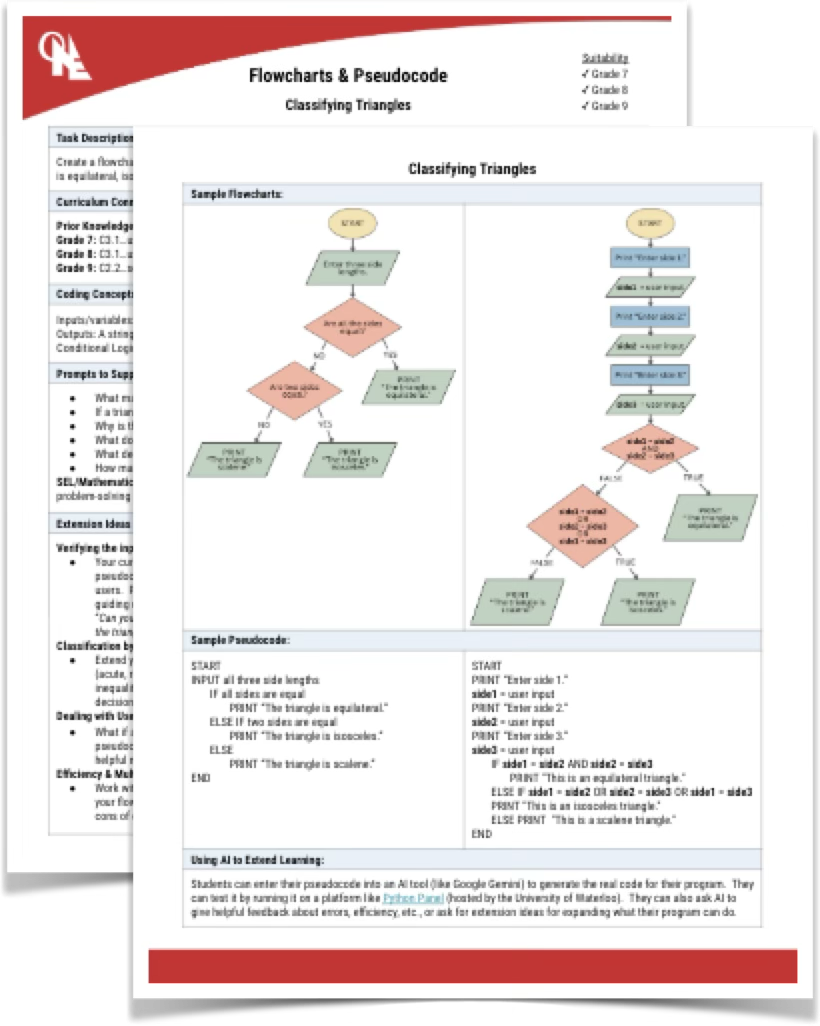
Classifying Triangles with Flowcharts and Pseudocode
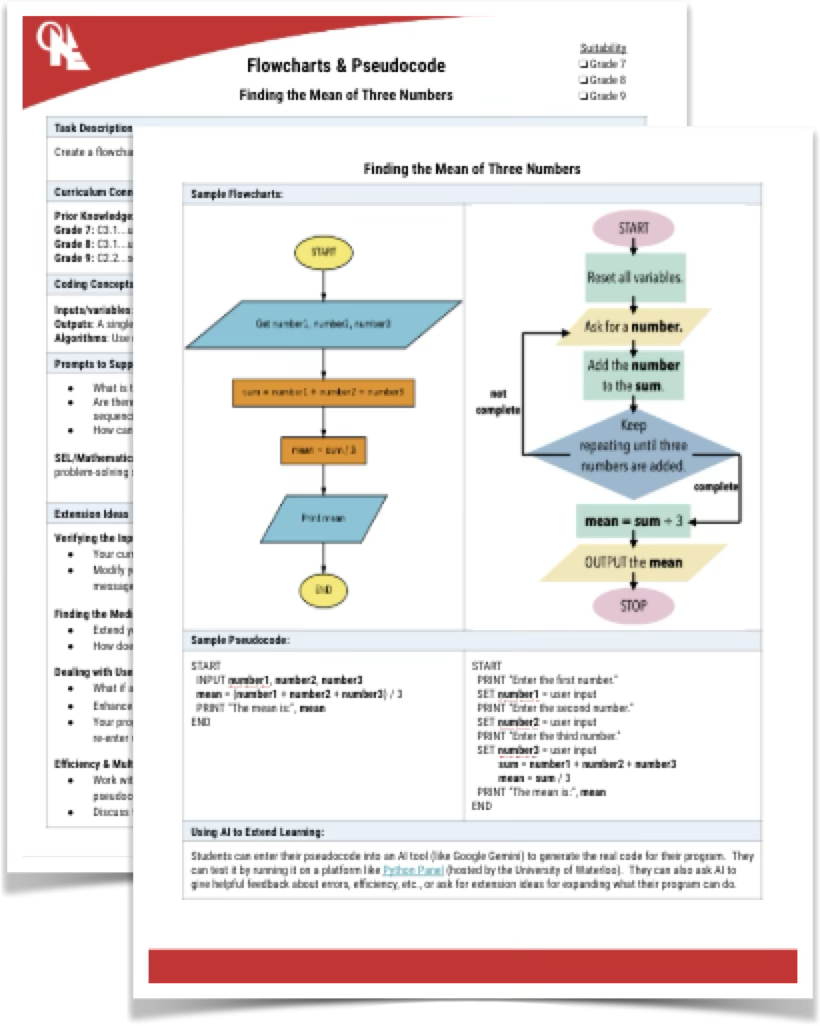
Finding the Mean with Flowcharts and Pseudocode
C3.2 represent linear relations using concrete materials, tables of values, graphs, and equations, and make connections between the various representations to demonstrate an understanding of rates of change and initial values

This lesson explores how visual representations of linear growing patterns can be described by rules and how those rules are expressed algebraically.
Key ideas:
slope/initial value
tables-of-values and first differences
moving students from additive/recursive to functional thinking
Using Scratch to Connect Equations & Graphs of Linear Relations
This lesson begins with a no-tech introduction to Scratch code representing a simple linear relation. Students will…
interpret and execute the code on paper before using technology
open a pre-made Scratch program and modify the parameters for slope and y-intercept to see their effect

Student handout
The student handout includes:
Guided lesson prompts
Space for independent practice
Extension activities
Consolidation task

Optional Minds-On Question
C3.3 compare two linear relations of the form y = ax + b graphically and algebraically, and interpret the meaning of their point of intersection in terms of a given context

Back to: